Key Takeaways
- AI is reshaping private practice. Success depends on choosing tools that integrate smoothly and deliver measurable results.
- Automation lowers burnout and billing risk, freeing providers to focus on care and precise documentation.
- SpeechTherapy-Cloud’s All In Intelligence represents the next era of AI in healthcare: intelligent workflows built by physicians to remove barriers and simplify daily work.
- Learn more about how All In Intelligence helps practices work smarter.
Artificial intelligence is transforming industries everywhere, and speech-language pathology is no exception. From scheduling and documentation to billing and charting, AI is quietly changing how clinicians manage their day.
But as new tools emerge, so does uncertainty. Which AI applications truly help? How much do they disrupt established workflows? And how can practices separate meaningful innovation from marketing hype?
During AI in Medical Practices: What Works and What’s Just Hype, Dr. Michael Dunn, CEO of Gateway Urgent Care and board member of the Arizona Medical Association, joined Adam Finzen, DPM, Director of Business Development at WRS Health, to help providers navigate the fast-changing AI landscape.
Together, they examined which AI solutions are showing real results, which pitfalls to avoid, and why meaningful AI for speech therapists must start with workflow design that mirrors how SLPs actually work.
Here are five key insights from the discussion—and practical steps to help you bring them to life in your own practice.
Table of Contents
1. The Speech AI Market Is Booming—But Not Everything Delivers Value
AI has reached a tipping point in speech therapy. According to a 2025 survey of 43 U.S. health systems, every organization surveyed had adopted an ambient AI tool for documentation, yet only 53% reported significant success in using it effectively.
As Dr. Dunn explained, this surge has led to “AI inflation”—a marketplace full of new tools promising transformation without delivering real integration or measurable improvements.
Many platforms are designed for hospitals, not specialty or private practices. Others require multiple logins, extra subscriptions, or disrupt clinicians’ existing routines. What should save time often ends up consuming it.
Put It Into Practice:
Evaluate AI based on outcomes you can measure: time saved, accuracy improved, or revenue protected. Look for solutions that integrate directly into your EHR, not those that operate beside it. If you can’t identify a clear benefit within the first demo, it’s probably not a fit.
2. SLPs Need AI to Stay Competitive
AI for speech therapists is becoming essential. Payers are now using AI to downcode and pre-screen claims, creating a new layer of pressure on providers. To compete, private practices need the same level of precision and speed.
Dr. Dunn noted that practices using AI for coding support, claim preparation, and pre-encounter documentation see fewer denials and faster reimbursements. Automating pre-visit chart prep or audit-ready documentation allows speech therapists to reclaim valuable hours each week while improving billing accuracy.
Put It Into Practice:
Identify your biggest time drains—documentation, coding checks, or eligibility verification. Start implementing AI there. Focus your investment where it improves both efficiency and financial performance.
3. What’s Actually Working Right Now
The most effective AI in healthcare isn’t broad or generic. It’s targeted, task-driven, and built to solve specific problems.
Dr. Dunn outlined several use cases showing measurable results in real-world practices:
- Ambient listening (AI Scribes): Automatically capture visit notes through secure, real-time transcription, reducing documentation time.
- Coding Assistants: Recommend codes based on documented care, improving accuracy and compliance.
- AI Search and Summaries: Quickly surface relevant details from incoming CCDAs and external records, giving providers the data they need in seconds.
- Mobile AI Apps: Extend secure access to charts, telehealth sessions, and prescribing tools.
- Patient Intake Assistants: Streamline registration by guiding patients through digital forms before appointments.
Integration is the key differentiator. AI that’s built directly into your EHR enhances flow; AI that functions outside of it disrupts it.
Put It Into Practice:
Select AI tools that work quietly within your system. The most effective solutions feel natural—helping clinicians without changing how they deliver care.
4. The Hype to Avoid in AI for Speech Therapy
Not every product marketed as “AI” provides value. Dr. Dunn encouraged practices to be cautious of:
- Predictive diagnosis agents that promise to “replace” physician reasoning
- Generic tools not tuned for specialty workflows
- Add-on subscriptions that don’t connect with your EHR
- Broad claims of saving time and money with no data to back them up
These products often sound impressive but fail under daily practice conditions. AI should support the clinician’s expertise—not try to imitate it.
Put It Into Practice:
Ask clear, specific questions: How will this tool improve my day-to-day efficiency? Can you show results from a practice similar to mine? Choose vendors that can demonstrate measurable, transparent outcomes.
5. Intelligent Speech Therapy AI Removes Barriers for Providers
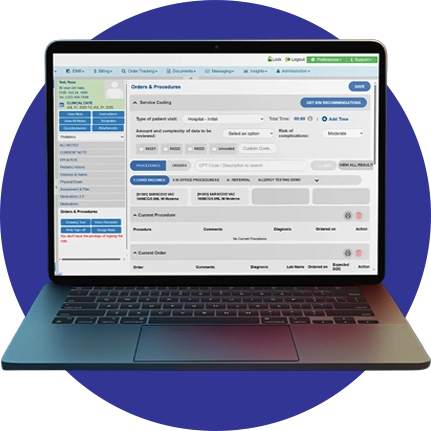
AI has the most value when it simplifies care rather than adding complexity. SpeechTherapy-Cloud’s All In Intelligence is designed around that idea. Instead of living in dashboards or stand-alone tools, it’s built directly into your daily workflow.
From chart prep and billing to documentation and scheduling, intelligent agents automate repetitive tasks, reduce clicks, and surface data exactly when you need it. Developed by physicians for clinicians, these tools restore time, clarity, and focus to your practice.
As Dr. Dunn put it, “AI should take away friction, not add it.”
Put It Into Practice:
Review where inefficiencies still exist in your workflow. Those friction points are your best opportunities for embedded AI to make an immediate difference.
Intentional AI Can Support Real World Care
The message from Dr. Dunn’s discussion is clear: the question isn’t whether to adopt AI—it’s how to use it with purpose.
Speech therapy practices that adopt technology with discernment will see the most benefit—choosing practical, data-driven tools that enhance both clinician and patient experience.
AI won’t replace the human connection at the heart of speech therapy, but it can make that connection stronger.
With All In Intelligence, SpeechTherapy-Cloud is leading that transformation—building tools that simplify, connect, and let providers focus on what matters most: delivering exceptional care.